
John William Armstrong
John Armstrong was born in Port Burwell on February 10, 1883 to John and Sarah Armstrong. He was living in Port Stanley with his wife Florence and their three children when he enlisted on January 6, 1916 in St. Thomas, just about a month shy of his 33rd birthday.
Private Armstrong was originally posted to the 208th Irish Battalion of the 1st Central Ontario Regiment. The 208th arrived in England on the SS Justicia on May 14th 1917. On February 16th 1918, Pte. Armstrong was transferred to the 58th Battalion and was immediately dispatched to France.
On October 7th 1918, Pte Armstrong received a gun shot wound to his right thigh and was transferred to the Field Hospital at Camiers, France. On October 13th 1918, less than a month before the Armistice and cessation of hostilities, John William Armstrong died of his wounds.
Private John William Armstrong is buried in the Etaples Military Cemetery, Pas de Calais, France.
Lest We Forget

James Lawrence Bain

James Bain was born December 27, 1893 in Hagersville, Ontario. He was the son of James E. and Harriet A. Bain of Port Burwell.
Private Bain enlisted in the Canadian Expeditionary Force on 13 Dec 1915 in Regina, Saskatchewan. Upon enrollment, he was assigned to the 68th BN. He sailed on board the SS Olympic from Halifax, arriving in Liverpool on 8 May 1916.
Private Bain was charged with Insubordination and was confined to barracks for 3 days after being found guilty on Jun 5th.
Private Bain was transferred to the 8th Battalion ( also known by the nickname of The Little Black Devils of Canada) on 18 Jun 1916 and was sent to France. The 8th Bn participated in The Battle of Thiepval Ridge which took place from 26 to 29 September 1916, in the Somme region of France.
At 1235 hrs on 26 September, the 1st and 2nd Canadian Divisions attacked under cover of a heavy barrage to support the start of the attack. German machine gun and artillery fire inflicted heavy casualties on the Canadian troops who had to advance across open terrain between the German trench lines and then face determined counter-attacks from the front and the flanks. By the end of the day, few of the enemy trenches had been captured and occupied fully.
Private Bain was Killed in Action on 26 Sep 1916 on the first day of fighting. He is memorialized on the Vimy Memorial. He is one of more than 700 Canadians killed in action between 26 and 29 September 1916 who have no known grave.
John Franklin Brinn
Welcome to Port Burwell Historical Society
Frank Brinn was born on August 12th 1890 in Kingsmill to John and Emeline Brinn. At the time of his enlistment his family was living in Vienna.
Frank Brinn enlisted on February 26th 1916 in Port Rowan. He was a member of the 39th Battalion of Canada’s Active Militia prior to volunteering for the Canadian Overseas Expeditionary Force. Upon his enlistment, Frank Brinn was assigned to the 133rdBattalion. He left Canada on October 30th 1916 and arrived in England on November 11th. On the 30th of that month, Pte Brinn was transferred to the 14th Battalion (Royal Montreal Regiment) and reported to the unit in France.
On the 20th of March 1917, Private Brinn suffered a gunshot wound to his right knee while at the Front. He was evacuated to Chatham, England where he spent months in various hospitals and rehabilitation facilities recovering from this wound before rejoining his unit on November 25th.
On September 23rd 1918, Pte Brinn was promoted to Lance Corporal. Four days later, on the opening day of the Battle of the Canal du Nord, LCpl John Franklin Brinn was Killed in Action. He is buried at the Sains les Marquion British Cemetery in Sains les Marquion, France.
Lest We Forget

Albert Graham Eakins

Albert Graham Eakins was born on August 3, 1887 in Port Burwell, Ontario, the second of six children, to James W. Eakins and Helen Poustie of Port Burwell.
Albert enlisted on February 13, 1915 in Edmonton, Alberta. He was studying Law at the University of Edmonton at the time of his enlistment. Initially, Albert was taken on strength as an Enlisted Man with the 3rd Canadian Mounted Rifles. He arrived in France as part of the 3rd CMR on September 22, 1915 having left Canada on June 12, 1915. At some point along the way, Albert received a promotion to Corporal. On April 2nd, 1917 he was sent back to England to undergo training for commission as an Officer. After successfully completing the course, Albert was commissioned to the rank of Temporary Lieutenant on July 1, 1917.
Albert remained in England, transferring between various Replacement Battalions until he was finally posted to the 1st Canadian Mounted Rifles on November 14th and joined the unit in France on November 22nd. At the time, the unit was posted in the “relatively quiet Lens sector” (Official History of the Canadian Army in the First World War: Canadian Expeditionary Force 1914 – 1919, Colonel G.W.L. Nicholson, C.D.; 1962)
It was in this relatively quiet sector that Lieut. Eakins was Killed in Action on January 1, 1918
Albert Eakins is buried the St. Patrick’s Cemetery in Loos-en-Gohelle, a village on the northern outskirts of Lens, and, is also commemorated on the remembrance plaque of the Alberta Law Society.
As a result of the First World War, 37 Alberta-based law students - including some studying at the University of Alberta Faculty of Law - lost their lives, and with that, their chance of ever finishing law school. On November 9, 2018, at the Calgary Court Center, Albert Graham Eakins and those 376 other students were posthumously admitted to the Alberta bar - the result of a resolution passed by the Law Society of Alberta's board of directors.
Lest We Forget
Mervyn MacDonald Hopkinson
Mervyn MacDonald Hopkinson was born on February 13, 1893 in Grey County, Ontario. His parents were James C. Hopkinson and Euphemia MacDonald Hopkinson.
Mervyn Hopkinson enlisted on April 19, 1915 in Hamilton. His Attestation Papers list his occupation as an Electrical Linesman.
Pte. Hopkinson was initially assigned to the 91stBattalion, and after training in Canada the unit arriving in England on June 28th, 1915 where he was transferred to the 35th Reserve Battalion.
Pte. Hopkinson was transferred to the 1st Bn on November 6th and joined the Unit in France on the 15th.
Pte. Hopkinson was offered a promotion to Lance Corporal (LCpl) without a pay adjustment. Pte. Hopkinson decided to turn down the promotion and stay a member of the other ranks. However, he was ultimately promoted to LCpl on March 24th, 1916.
LCpl Thompson spent some time in field hospitals during his posting in France. In December 1915 he was admitted for treatment of Laryngitis and didn’t rejoin his Unit until the new year, and, he was admitted again on May 24th, 1916 after receiving a gun shot wound to his face (cheek). He spent a little over two weeks in the field hospital before returning to the 1st BN on June 14th.
Upon his return to the 1st Bn, LCpl Hopkinson was promoted to the rank of Sergeant.
The Battle of Flers–Courcelette, 15 to 22 September 1916, was fought during the Battle of the Somme in France, by the French Sixth Army and the British Fourth Army and Reserve Army, against the German 1st Army, during the First World War. On 22 September, the 1st Canadian Brigade, commanded by Brigadier-General G.B. Hughes, carried out a small attack in front of Courcelette pushing the Germans back 500 yards. It was during this engagement that Sgt Mervyn MacDonald Hopkinson was Killed in Action.
Sgt Mervyn MacDonald Hopkinson has no known grave. He is remembered by Canada on the Vimy Memorial near Vimy, France. Inscribed on the ramparts of the Vimy Memorial are the names of over 11,000 Canadian soldiers who were posted as 'missing, presumed dead' in France.
Lest We Forget
We have been unable to uncover a photograph of Mervyn Hopkinson in spite of some lengthy research. If any members of the Hopkinson family have a photograph they would like to share, please let us know at pbhistoricalsociety@gmail.comso we can update our tribute to Sgt Hopkinson.

Charles Arthur Wellesley Forbes

Charles Forbes was born on June 18, 1893 in Newcastle, New South Wales, Australia to Dr. Arthur Daniel and Beatrice Agnes Carruthers.
The Forbes family had two others sons; George Freeman Murray Forbes (1896 – 1965) and James Murray Forbes (1897 – 1962). Dr. Arthur Forbes died in 1899. Mrs. Forbes and her three sons emigrated to Canada, landing in Saint John, New Brunswick in February 1912. They soon moved to Southwestern Ontario.
Charles enlisted on July 11, 1915 in London. His Attestation Papers list his occupation as a Labourer.
Pte. Forbes was assigned to the 33rd Battalion, and after training in Canada the unit sailed from Montreal to England on August 17, 1915 on the SS Scandinavian, arriving in Liverpool a week later.
Immediately upon arrival in England on the 24thof August, 1916, Pte. Forbes was drafted to the 1st Bn and the next day was in France. In February of 1916, Pte. Forbes was transferred to the 1stCompany, Infantry Brigade Machine Gun Company. His specific role was that of Signaller.
During the prelude to the Battle of the Somme, Pte. Forbes was Killed in Action on June 13, 1916
Charles Arthur Wellesley Forbes has no known grave. He is remembered on the Menin Gate Memorial in Ypres, Belgium. The Menin Gate bears the names of 55,000 men who were lost without trace during the defence of the Ypres Salient in the First World War.
Lest We Forget
Robert Carlton Grant
Robert Grant was born on March 9, 1891 in Straffordvile, to Alexander Grant and Maud Locker. Alexander and Maud were married on Jun 16, 1886 in Bayham and had five children; William, Anna, Gordon, Robert and Maud.
Robert enlisted on March 16, 1915 in Saskatoon, Saskatchewan. At the time of his enlistment, Robert was a student at the University of Saskatchewan.
After spending a short time with the 38th Reserve Battalion doing basic training, Pte. Grant was assigned to the Princess Patricia’s Canadian Light Infantry (PPCLI), and embarked for England on July 16, 1915.
Pte. Grant was Killed in Action on the first day of the Battle of Mount Sorrell on June 2, 1916
Robert Grant has no known grave and is remembered on the Menin Gate Memorial situated at the eastern side of the town of Ypres, Belgium. The Gate bears the names of 55,000 men who were lost without trace during the defence of the Ypres Salient in the First World War. Robert Grant is also commemorated on the War Memorial Gates at the University of Saskatchewan along with other alumni who gave their lives in the Great War.
Lest We Forget
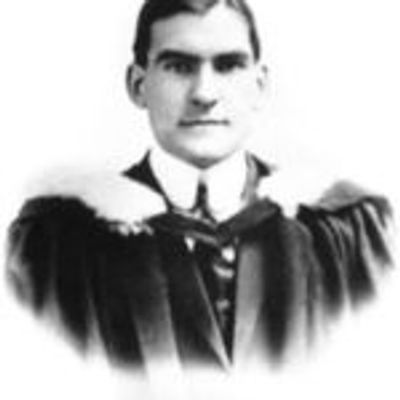
John Brower Kirkby

John Brower Kirkby was born in Teeswater, Ontario, on Christmas Day 1895, the son of Reuben F. and Cora Mary Kirkby, of Port Burwell, Ontario. He was the second of five children; Frederick, John, Carl, Vernon and Cora.
John was living at 386 Quebec Avenue in Toronto at the time of his enlistment, May 6th, 1916. His occupation is listed as Railroad Fireman.
Pte. Kirkby was initially assigned to the 204th Battalion, CEF, before being transferred to the 170th Bn. The unit sailed to England from Halifax aboard the SS Mauretania on October 25th, 1916. He was eventually transferred to the 15th Bn and joined the unit in France May 26th, 1917.
Pte. Kirkby was listed as being in and out of hospitals for a variety of reasons including among other ailments; rubella, a hernia, tonsillitis and being accidently wounded by a bomb fragment to his chin.
Pte. Kirkby was not a model soldier. He was sentenced to 20 days in detention for using improper language to a NCO.
In an unusually detailed record it is recorded that Pte. Kirkby was killed in action during the attack on the Canal Du Nord Line at 10:50 a.m. on September 27th 1918, while performing his duties as a Lewis Gunner covering the attack. According to two witnesses, he was struck in the heart by a machine gun bullet and was killed instantly.
Pte. Kirkby is buried in the Sains-les-Marquion British Cemetery in Sains-les-Marquion, Departement du Pas-de-Calais, Nord-Pas-de-Calais, France. He shares a headstone with a comrade in arms, Pte. George Cockburn, who was killed in action on the same day during the Canal Du Nord Line battle. He is also listed on the family headstone in Parklawn Cemetery, Toronto.
Thomas Henry Light
Thomas Henry Light was born on March 15, 1877 in Port Burwell, Ontario. His parents were Obed Edams Light and Hilda Maria Pettit. Thomas had three older sisters; Harriet (9 years older), Edith (7 years older) and Olive (3 years older)
Thomas Light enlisted on March 14th, 1916 in Tillsonburg. His Attestation Papers list his occupation as a Tinsmith/Plumber.
Pte. Light was initially assigned to the 168th Battalion, and after training in Canada the unit embarked on the SS Lapland from Halifax on October 30th and arrived in Liverpool on November 11th, 1916 where on December 5th he was transferred to the 39thReserve Battalion. On January 4th, 1917 he was transferred to the 6thReserve Battalion. Pte. Light was transferred to the 21st Bn on March 19th and joined the Unit in France.
On May 13, 1917, units of the Canadian Expeditionary Force (CEF) were primarily involved in holding the line, training, and routine trench duties following the major actions of the Battle of Arras, which had officially ended just three days prior. No major battle or large-scale offensive was launched by the CEF on this specific date.
Key activities around this time included:
· Holding the Line: Canadian units were positioned on the Western Front, consolidating their positions after the successful capture of Vimy Ridge in April and subsequent smaller actions like the Third Battle of the Scarpe (Capture of Fresnoy, May 3–4).
· Trench Raids: While large-scale battles were not occurring, Canadian forces maintained an "active patrolling policy" and conducted trench raids to gather intelligence, capture prisoners, and disrupt enemy morale.
Pte. Thomas Light was wounded during this time, suffering a gun shot wound to his left arm, shoulder and face. Pte. Thomas Light died from his wounds on May 13, 1917 at the 18th Casualty Clearing Station.
Pte. Thomas Light is buried at Lapugnoy Military Cemetery in Pas de Calais, France
Lest We Forget
We have been unable to uncover a photograph of Thomas Light in spite of some lengthy research. If any members of the Light family have a photograph they would like to share, please let us know at pbhistoricalsociety@gmail.com so we can update our tribute to Pte Light.

Lewis Austen Lockman

Lewis Austen Lockman was born on July 25, 1883 in Howton (sic), Norfolk County, Ontario. His parents were George Lockman and Jemima Kier. Lewis had two older sisters; Emiline (10 years older), Clara (6 years older).
Lewis Lockman signed his Attestation Papers on September 14th, 1914 in Valcartier, Quebec. His Attestation Papers list his occupation as a Farmer. He had previously served for 14 years with the 39th Battalion Norfolk Rifles and was a Sergeant at the time of his call up to active duty.
Sgt. Lockman was confirmed in his rank at Valcartier was initially assigned to the 60th Rifles Battalion of Canada, and after training in Canada the unit embarked from Quebec City on the SS Royal Edward for England on October 4th. (The SS Royal Edward was torpedoed and sank in the Mediterranean Sea on August 13th, 1915 with a large loss of life while transporting Dominion troops destined for Gallipoli.)
After arriving in England, the 60th Rifles were redesignated as the 11thBattalion C.E.F. On February 1st, 1915 he was transferred to the 5thBattalion and joined the Unit in France.
Sgt. Lockman had a bit of a roller coaster ride with his rank. He was confirmed a Sergeant in Valcartier on September 25th, 1914, but was reverted in rank all the way back to Private on January 31st, 1915 when he was transferred to the 5th Bn. while stationed at Tidworth in England. He was promoted to Lance Corporal in France on March 27thand then promoted to Corporal on May 16th.
The Second Battle of Ypres was fought from 22 April – 25 May 1915, during the First World War, for control of the tactically valuable high ground to the east and the south of the Flemish town of Ypres, in western Belgium. The First Battle of Ypres had been fought the previous autumn. The Second Battle of Ypres was the occasion of the first mass use by Germany of poison gas on the Western Front.
Cpl. Lewis Lockman was Killed in Action on the 24thof May during this engagement.
Cpl. Lewis Lockman has no known grave and is commemorated on the Vimy Memorial.
Lest We Forget
We have been unable to uncover a photograph of Lewis Lockman in spite of some lengthy research. If any members of the Lockman family have a photograph they would like to share, please let us know at pbhistoricalsociety@gmail.com so we can update our tribute to Cpl. Lockman.
WALTER EARL MARLATT
Walter Marlatt was born in Bayham in 1896 to Tilman and Maria Marlatt. He appears in the 1901 and 1911 Canadian Census documents as living on the family farm with his parents, his 5 brothers and 5 sisters.
Walter Marlatt, along with his friend, John Murphy (see above) enlisted in the Canadian Army on January 6th1916. Private Marlatt was initially assigned to the 42nd Battalion (Lanark and Renfrew Scottish Regiment) for Basic Training. In March he was transferred and taken on strength with the 91st Battalion and embarked for England with them sailing from Halifax on June 28th 1916 aboard the SS Olympic, disembarking in Liverpool on July 5th. Ten days later, Pte Marlatt was transferred to the 36th Battalion and in August was transferred once again to the 38th Battalion. He joined his unit in the field in France on September 29th.
Beginning on October 9th, the 38th Bn was bivouacked on the west slope of Tara Hill. They spent their time occupied with work parties and periods in the front line. It was during this period that Private Walter Marlatt was Wounded in Action. He would die of these wounds on November 3rd at the 11th Canadian Field Ambulance station.
Walter Marlatt is buried in the Albert Communal Cemetery Extension in the Department of the Somme, France.
Lest We Forget.

JOHN HERBERT MURPHY

John Murphy was born in Dunboyne on October 16th1897 to Edward and Thursa Anna Murphy. He grew up on the family farm in Vienna.
On January 6th 1916, John Murphy, age 18, enlisted in the Canadian Army in St Thomas (he signed his Attestation Papers as Johnnie H Murphy)
Pte Murphy was initially assigned to the 42nd Battalion (Lanark and Renfrew Scottish Regiment) for Basic Training. In March he was transferred and taken on strength with the 91st Battalion and embarked for England with them sailing from Halifax on June 28th1916 aboard the SS Olympic, disembarking in Liverpool on July 5th. Ten days later, Pte. Murphy was transferred to the 36th Battalion and in August was transferred once again to the 38th Battalion. He joined his unit in the field in France on September 29th.
As part of the attack on Desire Trench and Grandcourt the 38th went "over the top" for the first time on November 18th1916. It was during this attack that Private John Herbert Murphy was Killed in Action, one of over 500 casualties the 38th suffered during that day.
John Herbert Murphy has no known place of burial in France. His name is inscribed on the Vimy Memorial and on the Port Burwell Cenotaph.
Lest We Forget